
The Subscriptions Dashboard - Renewals, presents an overview of subscriptions, such as paid, pending payment, overdue, and canceled.
The quantities section quantifies renewals, and the charge attempts field helps understand at which effort most overdue payments are regularized. This data collectively optimizes your collection strategies, allowing you to focus your efforts where they are most effective.
The dashboard offers insights into revenue recovery, such as one-off payments, which show a percentage that pay outside the automatic flow, allowing you to focus on optimizing automatic billing and, thus, increasing LTV (Lifetime Value) and reducing churn.
Finally, in the reasons for refusal by attempt, it is possible to visualize the exact reasons why payments did not occur and, based on this, adjust retry strategies by sending the most personalized and effective communications to recover revenue.
On this page:
-
Overview
-
Subscription Renewals
-
Quantities
-
Collection Attempts
-
One-off Payment
-
Days until Payment
-
Reasons for Refusal by Attempt
Overview
In the Subscriptions Overview - Renewals section, you can observe the main indicators, based on the last 28 days (4 weeks).
The dashboard details the status of subscriptions, categorizing them into the following topics:
-
Paid: indicates the number of subscriptions paid in the period;
-
Waiting Payment: shows the number of subscriptions with scheduled or pending payment processing in the period;
-
Past Due: represents subscriptions with past due payments in the period;
-
Canceled: represents subscriptions that were canceled in the period.

The data can be used to enhance your results, for example:
-
With paid subscriptions, it is possible to monitor and track revenue inflow and the financial health of the business - understanding which products and services are performing well in terms of payment;
-
With pending payment subscriptions, it is possible to have visibility into upcoming revenue, preventing payment failures with proactive actions before the due date (such as sending communications and reminders);
-
With overdue subscriptions, it is possible to act quickly to recover revenue by sending automatic collection reminders to avoid delays that can lead to cancellations;
-
With canceled subscriptions, it is possible to analyze the churnrate and understand the reasons for cancellations to improve the product or service, creating retention strategies.
By default, the results presented consider subscriptions from the last 28 days.
Subscription Renewals
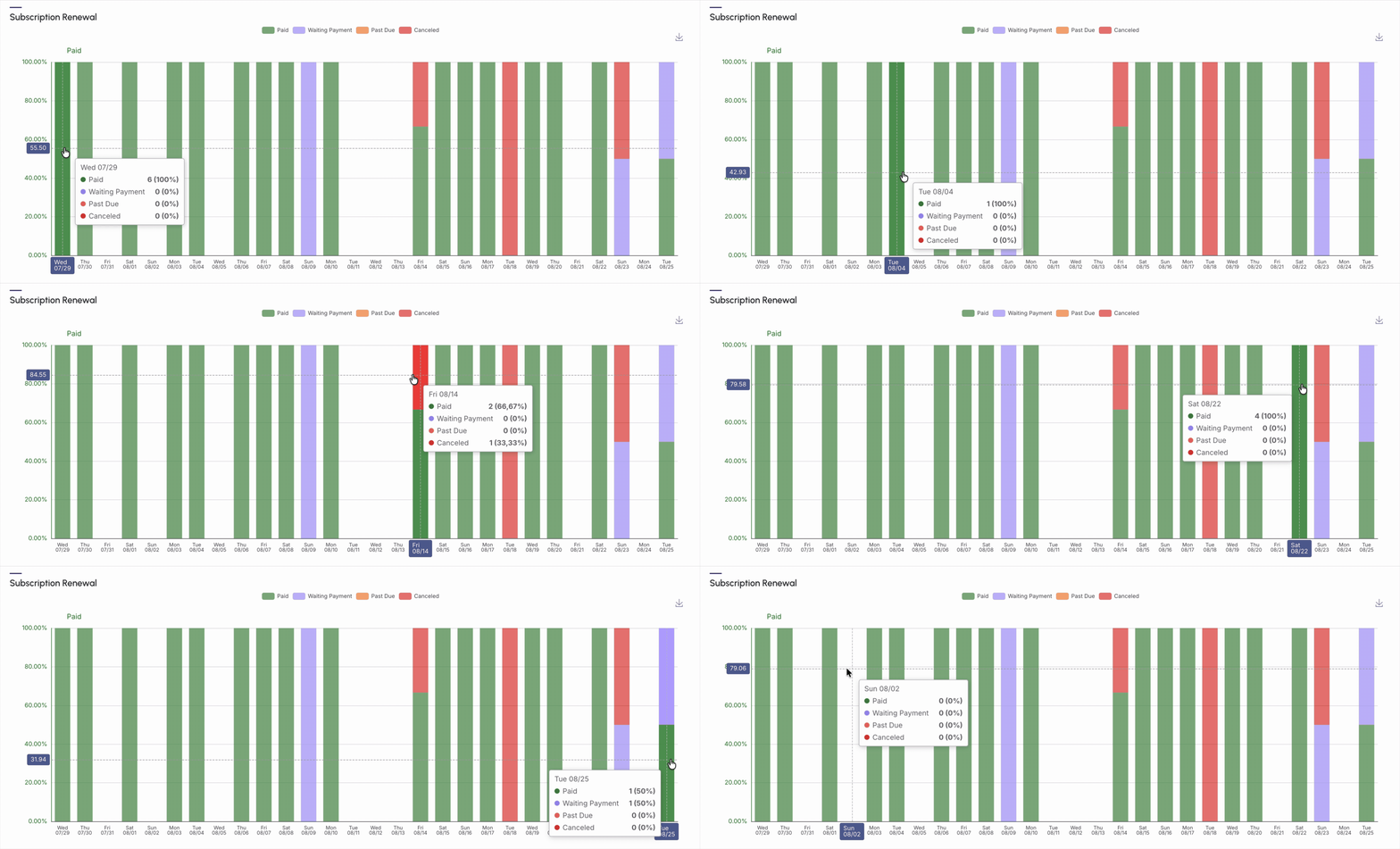
In the Subscription Renewals section, you can track the status of subscription renewals and it offers a dynamic and real-time view of the subscription lifecycle, through the statuses:
-
Paid subscriptions: represents the portion of subscriptions paid in the period;
-
Pending payment subscriptions: indicates subscriptions with scheduled or pending payment in the period;
-
Overdue subscriptions: shows the percentage of subscriptions with overdue payments in the period;
-
Canceled subscriptions: reflects the percentage of subscriptions canceled in the period.
By default, the results presented consider subscriptions from the last 28 days.
Quantities
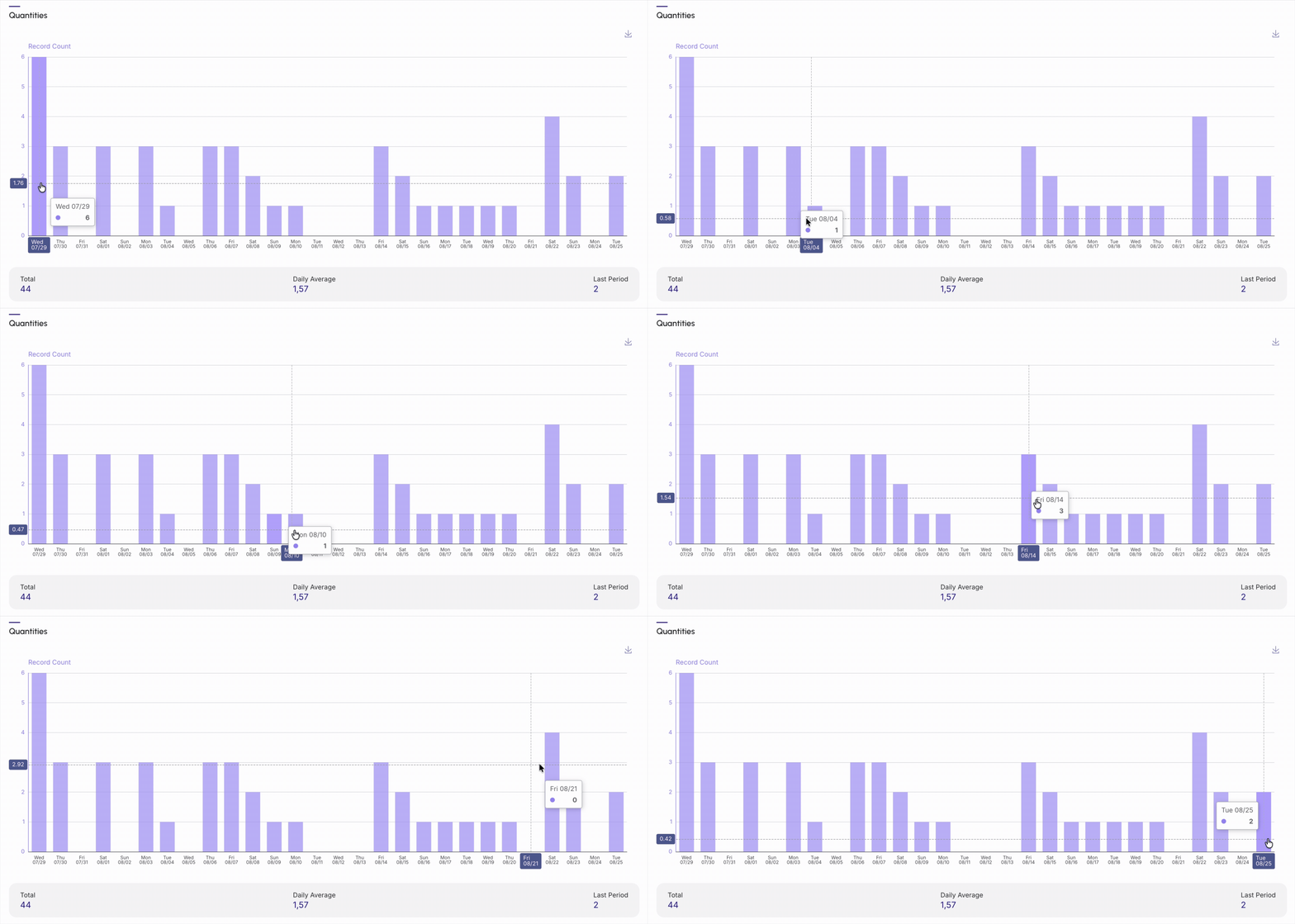
The Quantity section provides the number of renewed subscriptions in a specific period. A renewal is counted whenever the billing system successfully processes the payment for a subscription scheduled for renewal.
The advantages of understanding the frequency and volume of renewals help with revenue predictability, with the possibility of having a more accurate estimate of recurring revenue, which facilitates financial planning and resource allocation.
The chart data presents information such as:
-
Total: indicates the total number of renewals that occurred within the period;
-
Daily Average: calculates the average number of renewals per day, dividing the total renewals by the number of days in the period;
-
last Period: shows the most recent date a renewal was recorded.
Actions for more assertive decision-making to improve your business
-
Based on the renewal rate, it is possible to improve retention, for example, if the renewal rate is low, it is a sign that something might be wrong - analyzing cancellations improves the user experience to offer the most efficient support and create loyalty programs;
-
Optimize communication by sending renewal reminders a few days before the due date - this not only helps prevent cancellations but is also an opportunity to reinforce the value of your product or service; and
-
Adjust marketing and sales strategies, based on the perception of renewals by creating specific campaigns, it may be necessary to review this campaign - creation of special offers to encourage renewal.
-
By default, the results presented consider subscriptions from the last 28 days.
Guru Tip:
If desired, you can save the chart image: 
Payment Attempts
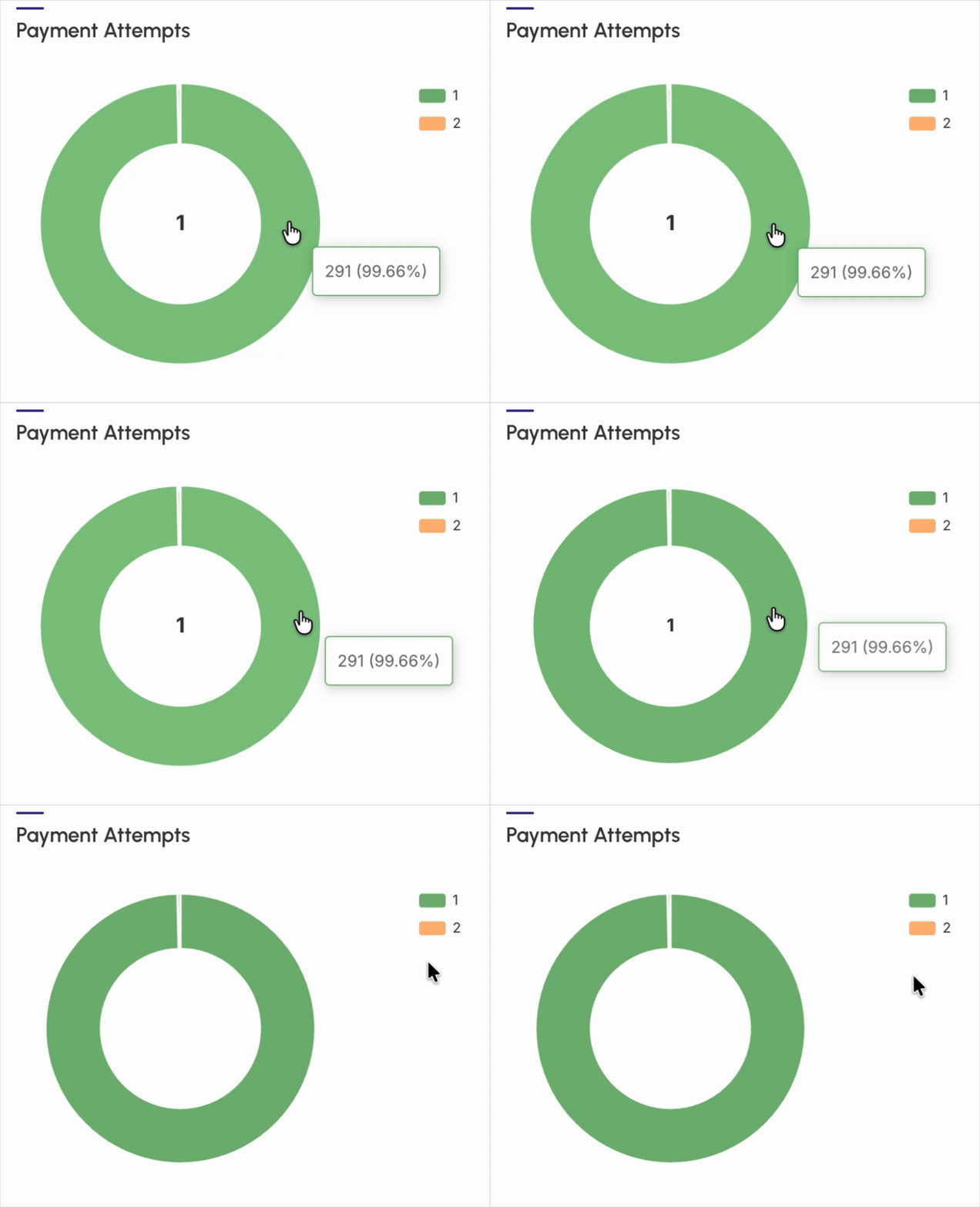
The Payment Attempts section presents the subscription collection attempts for subscription renewals.
Based on the data, it is possible to understand which attempt converts the most; this information is necessary for:
-
Identification of attempt pattern: by observing the history of attempts, it is possible to identify at which attempt overdue payments are regularized; and
-
Decision making: with this information, you can adapt your communication and collection strategies to optimize subscription recovery, such as sending reminders at strategic times or offering alternative payment options
By default, the results presented consider subscriptions from the last 28 days.
One-Time Payment
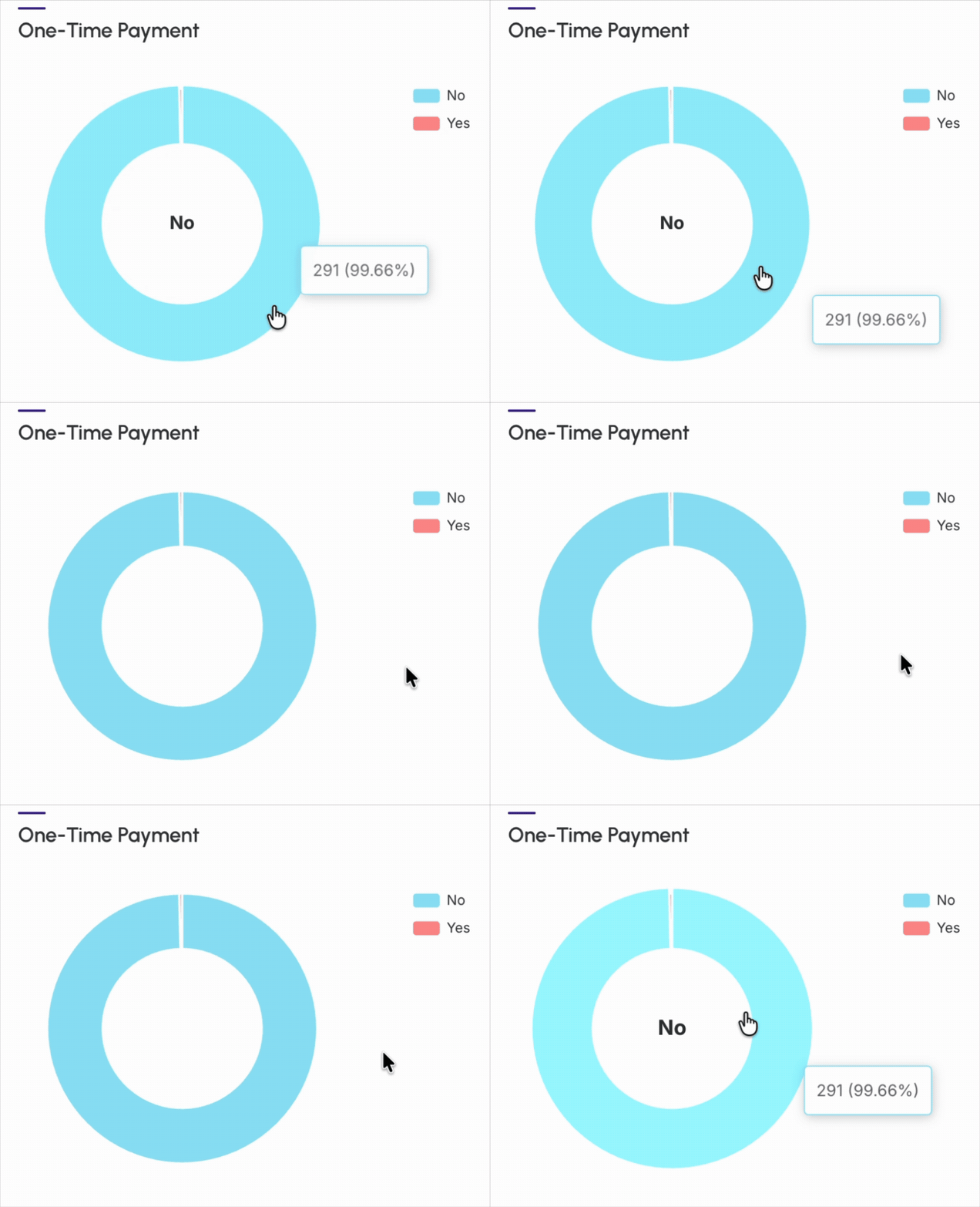
The One-Time Payment section allows you to track the status of payments made outside the automatic flow. It shows whether a subscription payment was made via a one-off link instead of automatic billing.
-
No: indicates that the charge was processed automatically, through the automatic flow;
-
Yes: indicates that the subscriber used a one-off payment link to settle the charge.
Actions that can be analyzed through the data
-
Based on the percentage of one-off payments, it is possible to optimize subscription recovery, using this information to:
-
Increase LTV (Lifetime Value): by ensuring that automatic billing works efficiently, you reduce service interruption, prolong the subscriber's lifecycle, and consequently increase LTV, and
-
Reduce Churn: working on recovering delinquent subscribers, directing them to correct payment data or offering the one-off payment option when necessary, is an effective strategy to reduce the cancellation rate (churn) and maintain an active subscriber base - the sales recovery team can act by monitoring and improving communication with these subscribers.
-
By default, the results presented consider subscriptions from the last 28 days.
Days until Payment
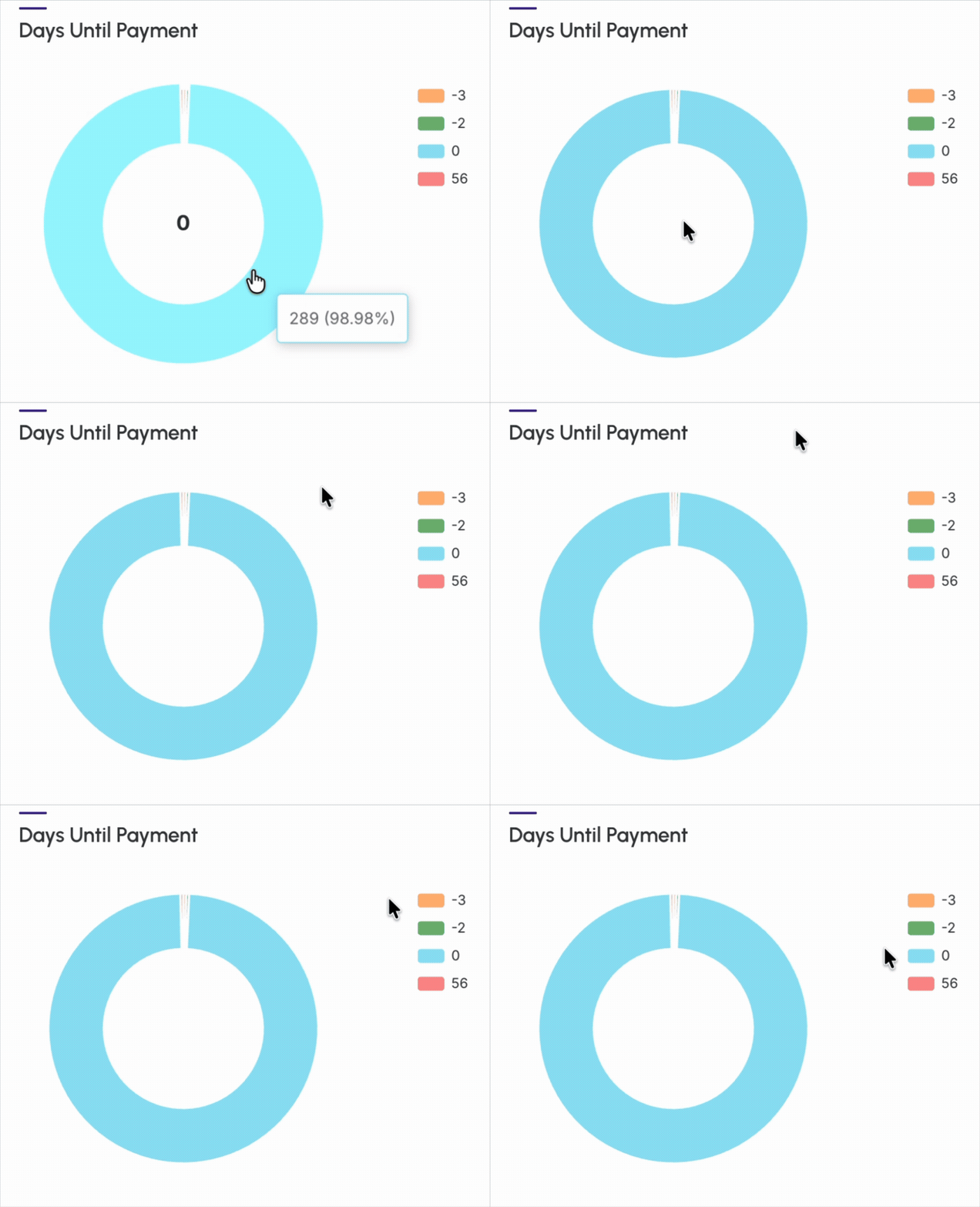
In the Days until Payment section, you can access how many days it takes for the subscriber to regularize the payment, i.e., the average time to regularize a payment after the initial billing failure.
Analyzing this data allows you to understand the impact of delinquency on your cash flow and create strategies to optimize recovery time.
Strategies to reduce regularization time
-
Immediate communication: activate integrations to send automatic notifications (email, SMS or WhatsApp) immediately after billing failure - this message can contain a direct link for one-off payment;
-
Smart retries: perform billing retries at strategic moments (e.g., on weekdays or during peak financial activity hours) - use the data from the collection attempts dashboard to refine this strategy; and
-
Optimize the collection cadence: by analyzing the average regularization time, you can adjust communications to be more effective, focusing efforts on days when conversion is likely.
By default, the results presented consider subscriptions from the last 28 days.
Reasons for Refusal by Attempt
In the Reasons for Refusal by Attempt section, you have access to refusal information, i.e., the reasons that led to payment refusal, offering a detailed analysis of the causes preventing charges from being successfully completed.
The panel presents data such as:
-
Identification of the cause of refusal: the specific reasons (such as "insufficient balance", "card error", etc.) that led to a payment not being processed; and
-
Analysis by attempt: the information is segmented by collection attempts (1st, 2nd, 3rd, and so on) - this data helps understand if a reason for refusal is persistent or changes with each new attempt. For example, a card might be refused for "insufficient balance" on the first attempt, but on the second, the reason might be different.

Actions that can be taken based on refusal reasons
-
Based on the reasons for refusal, improve communication - by identifying the reason for refusal, it is possible to send personalized messages with more precise information, such as the "card expired" notification, which informs the actual reason.
By default, the results presented consider subscriptions from the last 28 days.
Guru Tip:
You can export the spreadsheet by clicking on the CSV.