You can consult the activities associated with sales webhooks, as well as manage all changes made and related data.
For your security and control, all changes are recorded and can be consulted in the “Audit”.
On this page:
-
Detail
-
Activities
-
How to filter the Activities list
-
-
Audit
-
How to filter the Audit list
-
Before you start, you need to…
-
Be an administrator user or have permission to perform the following actions.
-
Have one or more webhooks registered in Guru.
Detail
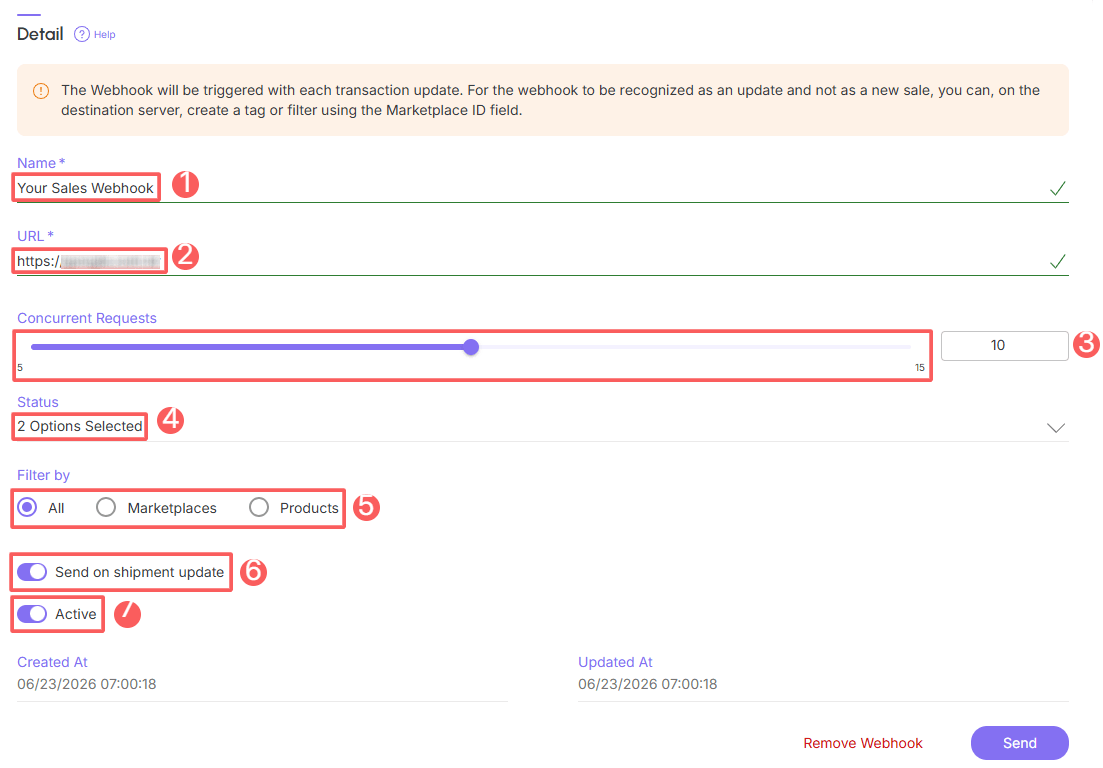
In the Detail section, you can edit or view information such as name, URL, simultaneous sends, webhook status, and filter by all, marketplaces, or products.
Steps:
1 - Access the list of sales webhooks - a screen with the data will be displayed.
2 - In the Detail tab, you can edit or view the following information:
-
Name: your webhook's name;
-
URL: destination URL obtained from the system in question (or from the responsible developer);
-
Simultaneous Sends: maximum number of simultaneous sends that Guru should perform - indicate an appropriate value to avoid overloading the destination server;
-
Status: for which sales statuses the webhook should be sent - you can select more than one;
-
Filter by: check filter by
all,marketplacesorproducts(1); -
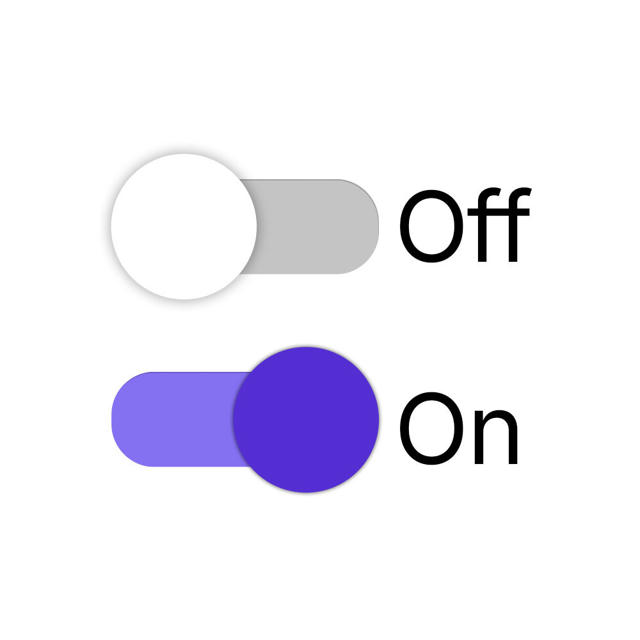
Send on carrier update: if you want the webhook to also be sent when a carrier update is received, switch the button to the on position;
-
Active: switch the button to the on position.
(1) When choosing to filter by “all” or “marketplaces”, any new product created will be automatically associated with the webhook.
Activities
As a security measure, Guru stores a history of all webhook data submissions, identifying the user, date/time of the operation, and other details. You can consult this information at any time.
Steps:
1 - Access the list of sales webhooks - a screen with the data will be displayed.
2 - Click on the Activities tab.
3 - Activities are displayed in a timeline (from most recent to oldest).

4 - If desired, you can view the activity detail by clicking on its title.

5 - Click on one of the available sections to view the data:
Detail
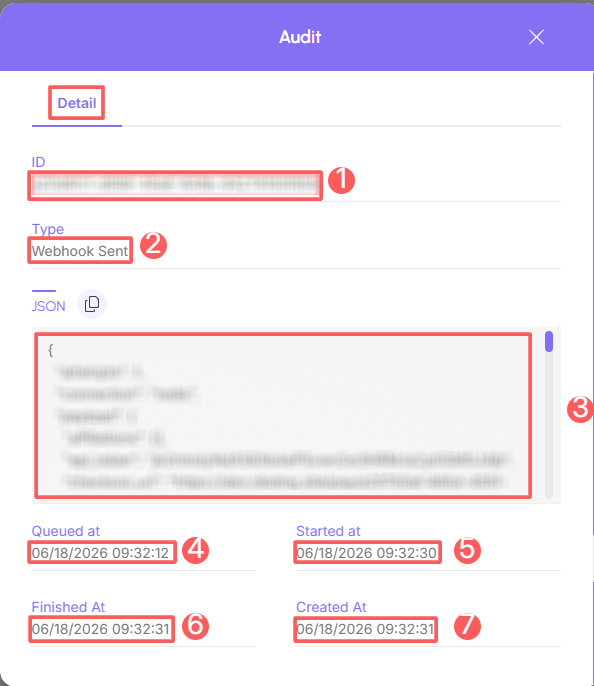
Displays detailed information about the activity in question.
-
ID: update identification number (ID);
-
Type of change made;
-
JSON1: event data in JSON format - when applicable;
-
Queued on: date the webhook was queued;
-
Started on: activity start date;
-
Finished on: activity end date;
-
Created on: activity registration date.
(1) Displayed only for events that pass through Guru's processing queue.
How to filter the Activities list
You can use the filters to view a smaller subset of existing activities. This feature is useful for finding specific activities you want to view.
By default, only records from the last 28 days will be shown, but the period can be changed in the filters, in the Period field.
Steps:
1 - Access the list of sales webhooks - a screen with the data will be displayed.
2 - Click on the tab Activities.
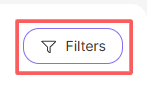
3 - Under Activities, click on Filters.
4 - Fill in one or more filter options:
-
Period: searches for audits registered in the selected period - you can use the predefined time interval buttons or select the date you want to view;
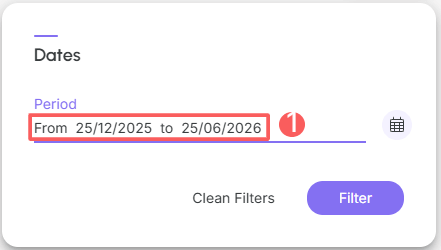
5 - Click on Filter.
You can view the number of applied filters, and when using them, you will be able to clear them without accessing the Filters icon again, making it easier to remove the selection.
Audit
As a security measure, Guru stores a history of all operations performed, identifying the user, date/time of the operation, and other details. You can consult the history of changes made to a webhook at any time.
Steps:
1 - Access the list of sales webhooks - a screen with the data will be displayed.
2 - Click on the Audit tab.
3 - Activities are displayed in a timeline (from most recent to oldest).

4 - If desired, you can view the activity detail by clicking on its title.

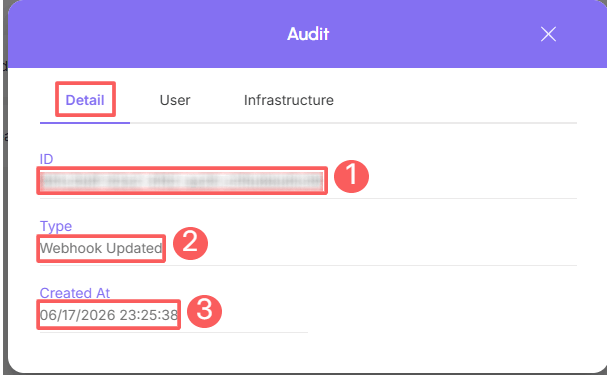
5 - In the Detail section, you can view the data:
Detail
Displays detailed information about the activity in question.
-
ID: update identification number (ID);
-
Type of change made;
-
Created on: activity registration date.
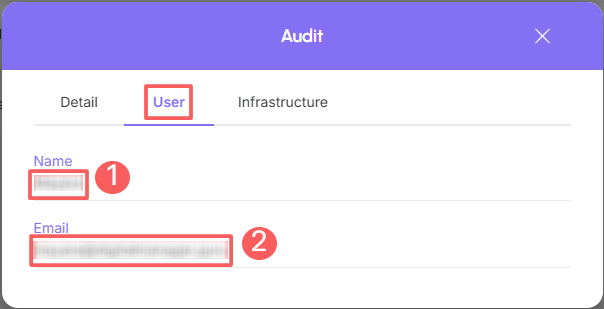
User
Displays information about the user who performed the action.
-
Name: name of the user who performed the operation;
-
Email: email of the user who performed the operation.
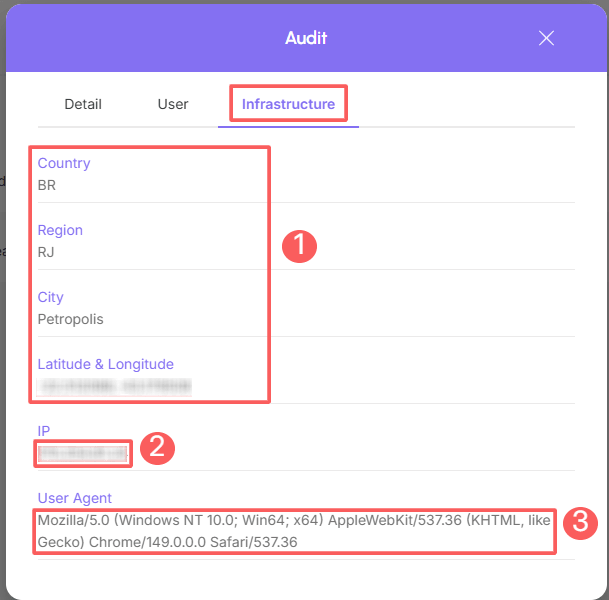
Infrastructure
Displays infrastructure information (country, IP, user agent, etc.) related to the activity.
-
Country, Region, City, Latitude & Longitude: location of the device that performed the activity.
-
IP: device IP address.
-
User Agent: identification of the user agent that performed the operation.
How to filter the Audit list
You can use the filters to view a smaller subset of existing audits. This feature is useful for finding specific audits you want to view.
By default, only records from the last 28 days will be shown, but the period can be changed in the filters, in the Period field.
Steps:
1 - Access the list of sales webhooks - a screen with the data will be displayed.
2 - Click on the Audit tab.
3 - Under Audit, click on Filters.
4 - Fill in one or more filter options:
-
Period: searches for audits registered in the selected period - you can use the predefined time interval buttons or select the date you want to view;
5 - Click on Filter.
You can view the number of applied filters, and when using them, you will be able to clear them without accessing the Filters icon again, making it easier to remove the selection.
Protect your data. Increase your business security.
Create and manage users determining what each collaborator can see and do within the organization.