
Webhooks registered in Guru are listed automatically. To find webhooks in a list with many records, you can search and filter the list.
On this page:
-
View the list of e-ticket webhooks
-
View the data of an e-ticket webhook
-
How to filter the list of e-ticket webhooks
-
Manage e-ticket webhook filters
-
Before you start, you need…
-
To be an administrator user or have permission to perform the following actions.
-
To have one or more e-ticket webhooks registered in Guru.
View the list of e-ticket webhooks
By default, the webhook list is organized by update date (newest to oldest). For faster page loading, only the first 30 records are displayed. If you want to view the other items in the list, you can scroll to the bottom of the page and click on View more at the bottom center of the screen.
The list displays the following information:
-
Name: webhook name;
-
URL: webhook destination URL;
-
Status: for which e-ticket statuses the webhook should be sent - you can select more than one.

View the data of an e-ticket webhook
You can view1 all webhook information or modify1 a webhook (edit, deactivate, remove, etc.).
(1) you need to have permission to perform these actions.
Steps:
1 - Access the list of e-ticket webhooks - if desired, you can apply a filter.
2 - Locate the desired webhook in the list.
3 - Click on the desired webhook.
4 - Consult the webhook information.

How to filter the list of e-ticket webhooks
You can use filters to view a smaller subset of existing webhooks. This feature is useful for finding specific webhooks you want to view.
Steps:
1 - Access the list of e-ticket webhooks - a screen with the data will be displayed.
2 - In Webhooks, click on Filters.
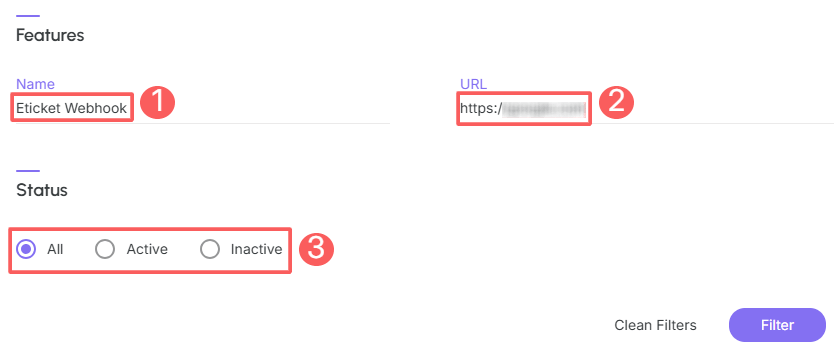
3 - Fill in one or more filter options:
-
Name: webhook name;
-
URL: webhook destination URL;
-
Status: searches for webhooks with status corresponding to the value(s) informed by webhooks that are active or inactive, or by all - you can choose more than one status for filtering.
If you add more than one filter, only webhooks that meet all the informed conditions will be displayed.
4 - Click on Filter.
To remove the applied filters, just click on Clean Filters.
Manage e-ticket webhook filters
You can check the number of applied filters when using filters to view desired information. This feature is useful if you want to check how many filters have been applied.
In addition, it is possible to clear the filters without accessing the Filters icon again, facilitating the removal of applied filters.
View applied filters
You can check the number of applied filters.
Steps:
1 - Access the list of e-ticket webhooks - a screen with the data will be displayed.
2 - In Webhooks, click on Filters.
3 - Fill in one or more filter options - apply the filters you want to view.
4 – Then, the number of applied filters will appear on the screen.

If you want to apply other filters, click How to filter the list of e-ticket webhooks.
Clear applied filters
You can remove the applied filters without needing to click on the filters icon.
Steps:
1 - Access the list of e-ticket webhooks - a screen with the data will be displayed.
2 - In Webhooks, click on Filters.
3 - Fill in one or more filter options - apply the filters you want to view.
4 - Then, click on Clean Filters.

If you want to apply other filters, click How to filter the list of e-ticket webhooks.
More Resources